
An extinguisher comes back from annual maintenance needing service. Do you pay to recharge it, or buy a new one?
Most discussions of this get the shape wrong. They treat it as a question about the agent. It almost never is — extinguishing agent is cheap relative to a new extinguisher in every category. The decision is really about two things: how much labor the job takes at your shop's rate, and how many years the cylinder has left before its next hydrostatic test.
Here is the arithmetic, with Amerex's actual service intervals and our current agent pricing.
The schedules, and which units they apply to
Three separate requirements get conflated constantly. From Amerex's owner's service manuals, which cite NFPA 10:
Inspection is the quick visual check: in place, unobstructed, gauge in the operable range, fullness determined by weighing or hefting, operating instructions on the nameplate and facing outward, seals and tamper indicators intact, and no obvious physical damage, corrosion, leakage or clogged nozzle.
Maintenance is annual. "At least once a year or more frequently if circumstances require, maintenance should be performed. Maintenance is a 'thorough check' of the extinguisher." It includes weighing the unit against the nameplate figure — outside tolerance, it gets recharged regardless of anything else.
The six-year teardown applies to some units and not others, and this is the part most often stated wrongly. Amerex's rule: "Every six years, stored pressure extinguishers that require a 12 year hydrostatic test shall be emptied and subjected to the applicable maintenance procedures."
| Agent | Hydrostatic test | Six-year teardown? |
|---|---|---|
| Dry chemical (ABC, Purple K) | 12 years | Yes |
| Class D dry powder | 12 years | Yes |
| Water and water mist | 5 years | No |
| Wet chemical (Class K) | 5 years | No |
| CO2 | 5 years, per DOT | No |
Amerex's manuals for water mist, wet chemical and CO2 contain no complete-maintenance or teardown section at all — those units instead hit a mandatory 5-year hydrostatic test, at which the agent comes out anyway.
Amerex also notes that "some states have legislation which requires 'Complete Maintenance' on an annual basis," so confirm your own jurisdiction.
What the agent actually costs
Agent is sold by the pail and covers multiple fills for the smaller units. Cost per pound, from our catalog:
- ABC dry chemical — 550, 50 lb pail, $208 ($4.16/lb) or 552, 25 lb pail, $119 ($4.76/lb)
- Purple K — Charge 515, 50 lb pail, $343 ($6.86/lb) or 553, 25 lb pail, $208
- Super D (Class D) — 557, 30 lb pail, $176 ($5.87/lb)
- Copper powder — 548, 50 lb pail, $1,110 ($22.20/lb)
The headroom math
Take the new price, subtract the agent, and what remains is your budget for labor, parts and shop time. If the job costs less than the headroom, recharge. If it costs more, replace.
| Unit | New | Agent per fill | Headroom for labor |
|---|---|---|---|
| 5 lb ABC (B402) | $80.00 | ~$21 | ~$59 |
| 10 lb ABC (B456) | $100.00 | ~$42 | ~$58 |
| 20 lb ABC (A411) | $186.00 | ~$83 | ~$103 |
| 10 lb Purple K (B460) | $219.00 | ~$69 | ~$150 |
| 6 liter wet chemical (C260) | $326.00 | $139 (Charge 530) | ~$187 |
| 2.5 gal water mist (C272) | $351.00 | $67.99 (671-2) | ~$283 |
| 30 lb Class D (B570) | $1,152.00 | $176 (30 lb fill) | ~$976 |
| 30 lb copper (C571) | $1,741.00 | ~$921 (41.5 lb fill) | ~$820 |
Two notes on that table. The copper figure surprises people: the C571 is a "30 lb" unit by discharge rating, but Amerex's recharge procedure specifies filling it with 41.5 pounds of copper powder, because the agent's density means extra is needed to achieve 30 lb of discharge. One 50 lb pail is one fill, not two.
And the water mist and wet chemical agents are listed by Amerex in some documentation as two-packs. Confirm the pack quantity against the Amerex parts book before you build a per-fill cost on those two lines — if they are two-packs, your real per-fill cost is roughly half what's shown, and the recharge case gets stronger still.
Reading the table
Small ABC is the tight one. A 5 lb unit leaves about $59 for labor and parts. Whether that is enough depends entirely on your shop rate and what the teardown turns up — a valve stem, an O-ring set or a gauge can consume it quickly. Run your own numbers rather than assuming either answer; this is the size where the decision genuinely flips depending on who is doing the work.
Class D is never close. Roughly $976 of headroom on a B570. Nobody should be replacing these.
Water mist, wet chemical and CO2 are not close either, and they never face a six-year teardown — their agent comes out at the 5-year hydro regardless, so the marginal cost of recharging at that point is small.
Wheeled units are serviced, full stop. At $3,040 to $16,965 new, you service a wheeled unit until the cylinder itself fails hydro.
When the cylinder decides for you
None of this matters if the shell fails. Amerex's manual is direct: inspect the cylinder for "corrosion, abrasion, dents or weld damage. If any damage is found, hydrostatically test in accordance with instructions in CGA C-1 and C-6 and NFPA 10." A cylinder that fails hydrostatic testing is scrap, whatever the agent inside is worth.
Remaining hydro life is the variable people forget. Recharging a dry chemical unit in year eleven of a twelve-year cycle buys one year before a test it may not pass. The same job in year two buys ten. Identical cost, wildly different value — check the date of manufacture on the nameplate before you authorize the work.
Replacing also restarts the clock: a new unit begins its own 12-year cycle and carries a fresh manufacturer's warranty — six years on ABC dry chemical and Class D, five on water mist, wet chemical and CO2, twelve on the Z-Series high performance line.
Use factory parts
One line from the Amerex manual is worth quoting exactly, because it bears on both the warranty and the UL listing: "Only factory replacement parts are approved for use on Amerex fire extinguishers."
A teardown that turns up a worn valve stem, a cracked gauge or a perished O-ring set is routine. An aftermarket part on a listed extinguisher is not a saving.
Our companion guide works through which recharge agent and fill adapter fits your extinguisher — and every OEM part a recharge consumes.
What we stock
Recharge agents — ABC 550, 552 and 555 F-13; Purple K Charge 515 and 553; Super D and 545; copper powder; wet chemical Charge 530 and 660-2; water mist 670-2 and 671-2; plus G-Plus graphite and 506B antifreeze.
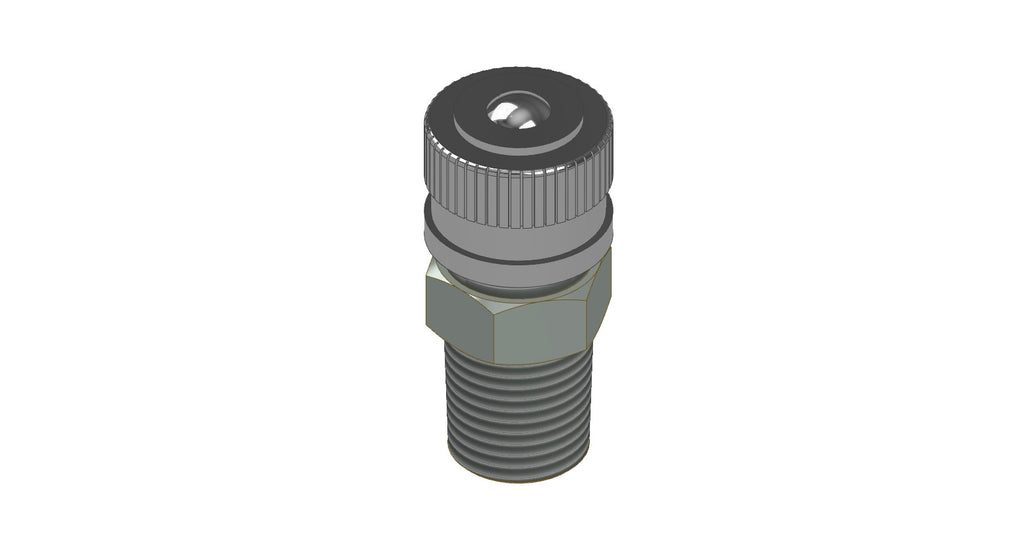
Factory service parts — valves, gauges, hoses, nozzles, pull pins, O-rings, seals and nameplates in the service parts catalog, searchable by Amerex part number.
Replacement units — the full extinguisher range.
Servicing a fleet and want standing pricing on the consumables you go through every year? Request a quote
Sources
Inspection, maintenance, teardown and hydrostatic requirements are quoted from Amerex Corporation's owner's service manuals for hand portable dry chemical, water mist, wet chemical, CO2 and Class D extinguishers, which cite NFPA 10. Warranty periods are from Amerex's published catalogs. Intervals vary by agent and some states impose stricter schedules — confirm against the extinguisher's nameplate, the current Amerex manual for that model, and your authority having jurisdiction. Prices are our current catalog prices and exclude labor.
We sell equipment and factory OEM parts. We do not perform inspection, service, hydrostatic testing or recharging — Amerex states plainly that it does not service extinguishers either, and recommends the work be done by a trained professional. Their distributor directory will find one near you.
ShopAmerex.com is owned and operated by Centurion Holdings Group LLC, an independent authorized distributor of Amerex Corporation products.