
A rechargeable fire extinguisher is built to be opened, inspected, refilled, and put back into service; a disposable one is built to be used once and replaced. A cheap extinguisher is not automatically a bad one, and an expensive one is not automatically a good one — what actually separates the two categories is serviceability. A rechargeable extinguisher is a stored-pressure vessel with a serviceable valve, a cylinder rated for repeated re-pressurization, and a manufacturer that publishes the replacement parts, the recharge agent, and the warranty terms needed to keep it working for years. Where those documents don't exist for a unit — no parts list, no named recharge agent, no warranty terms — a technician has nothing to work from, and the unit is effectively a one-use item. Whether they exist is something you can check on any listing before you buy.
That distinction — not price, and not where a unit was assembled — is what should decide a purchase. A small disposable extinguisher sold on an online marketplace or off a hardware-store shelf is a reasonable thing to keep in a kitchen drawer, a glove box, or a first apartment, and nothing here argues otherwise. The moment an extinguisher is protecting a business, a vehicle fleet, a shop floor, or anything with a fire-code inspection requirement, though, it has to answer four questions — and each one is something you should be able to answer from the listing itself, at any price: Is there a published parts book? Can it be recharged after use, with the manufacturer naming the agent? Does a warranty document exist, and does it say what voids it? Is a UL rating published, and does the listing say who actually manufactured it? Amerex Corporation — founded in 1971, headquartered in Trussville, Alabama — answers all four in writing. This guide shows where.
The honest starting point: something is better than nothing
Amerex doesn't compete for the kitchen-drawer buyer, and this isn't an argument against buying one. A compact, inexpensive extinguisher that a person will actually keep somewhere reachable is worth having, and it can knock down a small grease fire or a wastebasket fire just as a larger unit would. The pivot happens somewhere else: the moment an extinguisher exists because a fire code, an insurance requirement, a lease, or an authority having jurisdiction (AHJ) says it has to — a restaurant kitchen, a warehouse aisle, a fleet vehicle, a server room — it stops being a one-time purchase. A required extinguisher gets inspected monthly and serviced at least annually for as long as it's in the building, and it has to survive that cycle, not just one incident. That's where construction and serviceability — not price, not geography — become the whole decision.
The four questions that actually separate them
None of these require taking anyone's word for it. Each one can be checked against a listing before you buy, and Amerex publishes a documented answer to every one of them.
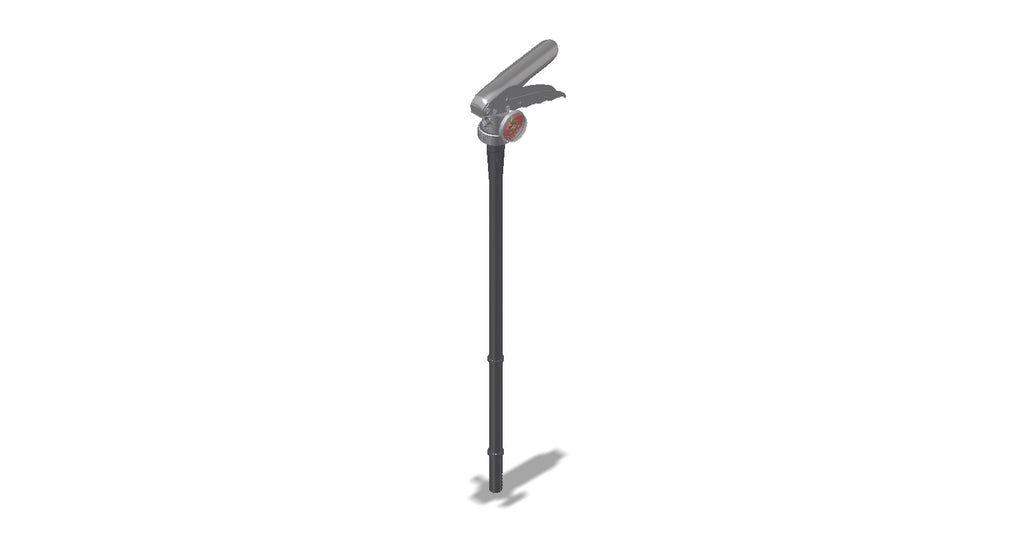
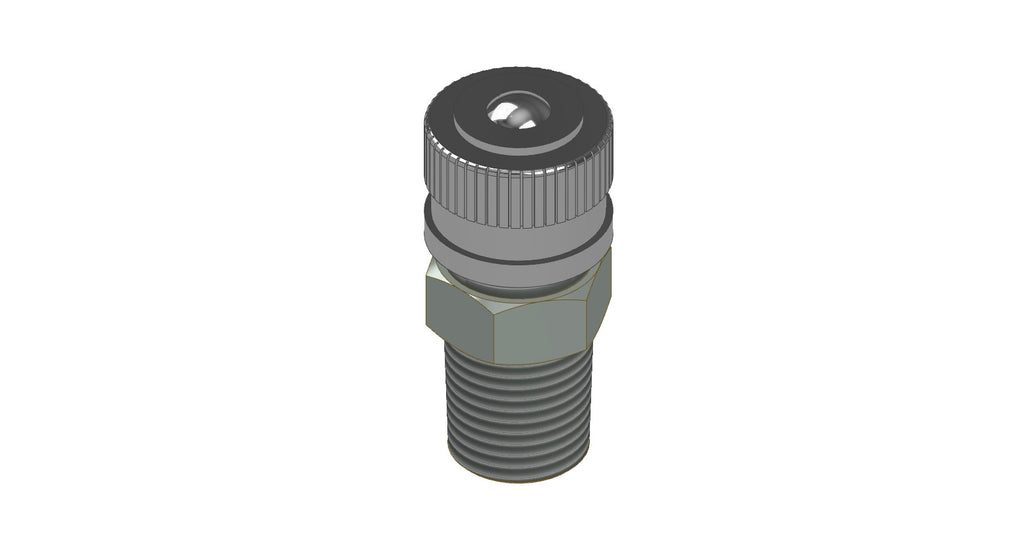
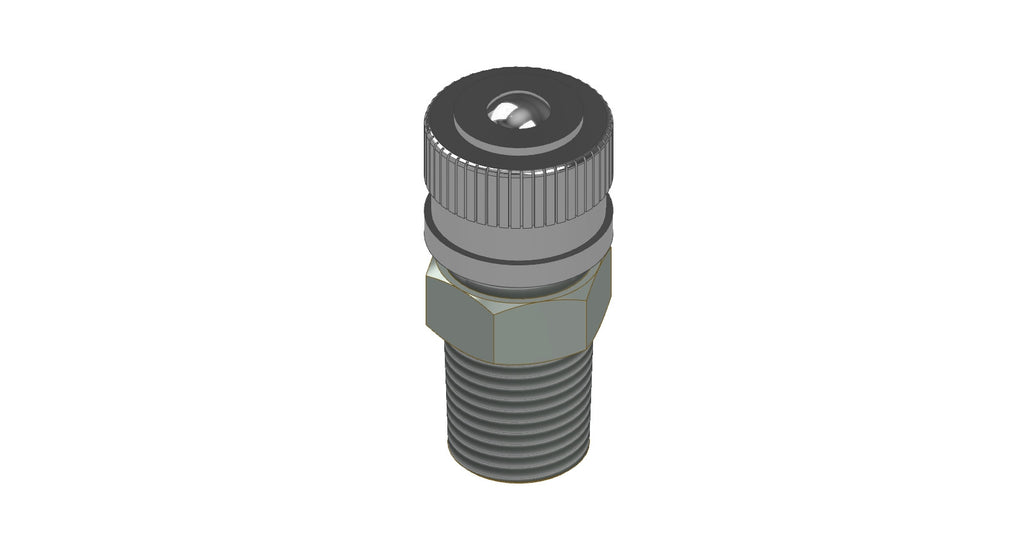
Is there a published parts book? Amerex's Parts Book (P/N 27277) lists the valve assembly, gauge, hose and horn assembly, downtube, collar O-ring, and nameplate for its extinguishers individually, by part number. The standard aluminum valve assembly used across the 5–10 lb ABC and Purple K line, for example, is P/N 11823; its 195 PSI gauge is 03103-P; its collar O-ring is 05241-P. A manufacturer that can hand a technician a specific part number for a single O-ring has, by definition, engineered the unit to be taken apart.
Can it be recharged after use, and does the manufacturer name the agent? Amerex's service manual for dry chemical extinguishers instructs technicians to "RECHARGE FIRE EXTINGUISHERS IMMEDIATELY AFTER ANY USE," and its recharge procedure calls for filling the cylinder with "the correct amount and type of dry chemical specified on the label (nameplate)." That's not a one-off instruction — Amerex publishes a matching recharge or recharge/reclaim procedure across its rechargeable lines: dry chemical (ABC and Purple K), CO2, water, wet chemical, water mist, and Halotron® I are each covered by an owner's service manual.
Does a warranty document exist, and does it say what voids it? Amerex's catalog states a manufacturer's warranty for every product line it sells, and the Parts Book spells out what ends it: "To protect the UL listing and to keep the warranty in effect Amerex replacement parts must be used," and the Amerex warranty "is voided by the use of generic, off-the-shelf or substitute parts." The service manuals carry the same condition in their own words — the dry chemical manual warns that "USE OF SUBSTITUTE PARTS RELEASES AMEREX OF ITS WARRANTY OBLIGATIONS." A warranty you can read, with a stated condition, is a different thing from a warranty a listing merely claims to have.
Is a UL rating published, and does the listing say who manufactured it? Nearly every model in Amerex's catalog carries a UL & ULC rating in its own spec table — a code like 4A:80B:C for the B456 and B441 — and Amerex's Parts Book has to footnote the replacement nameplates that "do not include UL and USCG Listing," which tells you the rest carry it. If you're not sure how to read that code once you find it, our guide to what fire extinguisher UL ratings actually mean breaks it down. A listing that shows neither a rating nor a named manufacturer isn't showing you anything you can verify later.
What "rechargeable" actually requires under NFPA 10
Rechargeability isn't just a feature — it's a maintenance schedule, and Amerex's own service manuals quote it directly from NFPA 10. Extinguishers get a monthly "quick check" to confirm they're in place, charged, and undamaged. Then, per the manual, "[NFPA-10] At least once a year or more frequently if circumstances require, maintenance should be performed" — a thorough inspection that determines whether internal service or hydrostatic testing is needed. Every six years, stored-pressure extinguishers requiring a 12-year hydrostatic test "shall be emptied and subjected to the applicable maintenance procedures" — a full teardown, not just an inspection. And the cylinder itself must be hydrostatically tested on a schedule set by its agent — Amerex's dry chemical manual states the cylinder "must be hydrostatically tested every 12 years to the test pressure indicated on the nameplate," while the water, wet chemical, water mist, and CO2 manuals set that interval at every 5 years.
Those intervals only exist because the hardware is built to be opened and rebuilt. A unit with no published parts, no recharge procedure, and no warranty document has nothing for a six-year teardown or a 12-year hydrostatic test to act on — there's no service path to follow, so the interval is moot. For the deeper mechanics of that maintenance clock, including where different Amerex product lines stamp their date of manufacture, see our guide to Amerex maintenance intervals and date of manufacture.
Construction, line by line
"Rechargeable" isn't one uniform spec across Amerex's catalog — valve material, cylinder type, and warranty length all vary by agent and duty class, and the catalog states each of them per line. Two specialty clean-agent lines are the exception worth noting: Amerex builds Halotron® BrX and the HT Series as engineered non-rechargeable units with a published, fixed 12-year service life. Both are non-rechargeable; what separates them is disclosure. Amerex states the service life, the construction, and the warranty in writing, which is exactly what to look for on any non-rechargeable unit before buying one.
| Product line | Valve construction | Cylinder | Temperature range | Manufacturer's warranty | Rechargeable |
|---|---|---|---|---|---|
| ABC dry chemical | Anodized aluminum (light/medium duty) or chrome-plated brass (heavy duty) | Drawn steel | −65°F to 120°F | 6 years | Yes |
| Purple K dry chemical | Anodized aluminum or chrome-plated brass | Drawn steel | −65°F to 120°F | 6 years | Yes |
| High-flow dry chemical (ABC/Purple K) | Chrome-plated brass, heavy duty | Drawn steel | −65°F to 120°F | 6 years | Yes |
| Carbon dioxide (CO2) | Chrome-plated brass | Rust-free aluminum | −22°F to 120°F | 5 years | Yes |
| Water | Chrome-plated brass | Polished stainless steel | 40°F to 120°F (−40°F with optional anti-freeze charge) | 5 years | Yes |
| Wet chemical (Class K) | All stainless steel | Polished stainless steel | 40°F to 120°F | 5 years | Yes |
| Water mist | All-metal | Stainless steel | 40°F to 120°F | 5 years | Yes |
| Halotron® I | Anodized aluminum or chrome-plated brass | Drawn steel (chrome option available) | −40°F to 120°F | 6 years | Yes |
| Halotron® BrX (2-BTP) | Anodized aluminum | Aluminum (Model 351 uses steel) | −40°F to 120°F | 6 years | No — 12-year published service life |
| HT Series | All-metal | Aluminum or steel (Model 551) | −40°F to 120°F | 6 years | No — 12-year published service life |
| Z-Series | Chrome-plated brass with gauge guard | Drawn steel; optional proprietary zinc-enriched coating rated to resist corrosion up to 12 years in severely salt-contaminated environments | −65°F to 120°F | 12 years | Yes |
| Brackets (all lines) | — | — | — | 1 year | — |
The parts economy: why a published parts book is the real argument
The existence of a parts book is itself the case for a serviceable extinguisher, because it proves the manufacturer engineered the unit to be maintained rather than replaced. Amerex's Parts Book states the reasoning plainly: "Genuine factory parts are available to insure proper maintenance - use of other manufacturer's parts releases Amerex of its warranty obligations. Amerex parts have machined surfaces and threads which are manufactured to exacting tolerances." A representative sample of what that means in practice, all from the same 5–10 lb dry chemical valve platform:
| Component | Example | Amerex part number |
|---|---|---|
| Valve assembly | Standard valve assembly, 5–10 lb ABC/Purple K, with loop | 11823 |
| Gauge | 195 PSI gauge | 03103-P |
| Hose & horn assembly | B453/B500 hose & horn, .147 orifice | 06215-P |
| Collar O-ring | Collar O-ring | 05241-P |
| Downtube | B402/B453/B479/B500 downtube & retainer assembly | 06212 |
| Valve stem | Valve stem assembly, aluminum valve | 06092-P |
That's a fraction of one platform out of Amerex's full catalog — the Parts Book covers every hand-portable and wheeled line the company sells the same way. (For a look at how far this shared-parts logic extends between two models on the very same valve platform, see our comparison of the B402 and B500.) Before buying any extinguisher, look for the equivalent document. If no parts list exists for a unit, then individually replaceable parts aren't part of its design — there's nothing for a service technician to order when a gauge or an O-ring fails.
Provenance: an Amerex fact, not a rule about imports
Amerex was founded in 1971 and is headquartered in Trussville, Alabama — the current catalog's front matter states, "Since 1971, our commitment to quality, service, and innovation has been unmatched," and amerex-fire.com's About Us page describes the company as "Founded in 1971," "Headquartered in Trussville, Alabama," and "a global leader in the design and manufacture of fire extinguishers." That's a verifiable fact about Amerex's own history and operations, and it's a fair thing to know about the company behind the nameplate.
It is not, and this guide does not treat it as, a rule that extinguishers made outside the United States are inferior. Where a given unit was assembled doesn't by itself answer any of the four questions above. A unit built anywhere can be serviceable if its maker publishes a parts book, a recharge procedure, and a warranty, and a unit built anywhere can be a black box if its maker publishes none of that. Origin is a data point about a specific manufacturer's history; it isn't the test.
Frequently asked questions
Are cheap fire extinguishers any good? For their intended purpose — a first line of defense in a home, a car, or an apartment — yes, a small, inexpensive extinguisher within reach is better than having nothing. The trouble with the question isn't the price, it's what "good" is being asked to mean. Once an extinguisher has to survive a monthly inspection routine and years of standing by under NFPA 10, the real test becomes whether it can answer the four questions in this guide — and those are worth checking on any unit, at any price, before it's the one hanging on the wall.
What is the difference between a rechargeable and a disposable fire extinguisher? A rechargeable extinguisher is a stored-pressure vessel engineered to be opened, inspected, refilled with the agent "specified on the label (nameplate)," re-pressurized, and returned to service — Amerex's own service manual instructs that extinguishers be recharged "immediately after any use." A unit with no published recharge procedure has no documented path back into service after use — nothing telling a technician what agent to refill it with or to what pressure. Whether such a procedure exists for a given extinguisher is stated in its documentation, or it isn't. A small number of specialty clean-agent extinguishers — Amerex's Halotron® BrX and HT Series among them — are engineered as non-rechargeable with a fixed, published 12-year service life instead of a recharge cycle — with that service life stated and backed by a written warranty, which is what to check on any non-rechargeable unit.
Are Amerex extinguishers made in the USA? Amerex was founded in 1971 and is headquartered in Trussville, Alabama, and amerex-fire.com's About Us page describes it as "a global leader in the design and manufacture of fire extinguishers." That's a fact about Amerex's own history, not a claim about anyone else's manufacturing — where a given extinguisher was built doesn't by itself tell you whether it's serviceable. The parts-book, recharge, warranty, and UL-nameplate questions in this guide apply to any extinguisher regardless of where it was made, and they're the ones worth asking.
Can a fire extinguisher be recharged after use? A commercial-grade rechargeable one, yes — provided it was built to be, which is what "commercial-grade" should mean in practice. Amerex publishes a Parts Book (P/N 27277) listing individual replacement parts by number, service manuals covering monthly inspection and annual maintenance per NFPA 10 — with a six-year teardown and 12-year hydrostatic test where the agent requires it (dry chemical among them) and a 5-year hydrostatic test for water, wet chemical, water mist, and CO2 — and recharge or recharge/reclaim procedures for its dry chemical (ABC and Purple K), CO2, water, wet chemical, water mist, and Halotron® I lines. Whether recharging a specific unit is worth the cost against buying new is a separate, unit-by-unit question — see our guide to recharging vs. replacing a fire extinguisher.
What should I look for when buying a fire extinguisher? Four things, in this order: whether a parts book or replacement-parts list exists for the unit; whether it can be recharged after use and the listing names the recharge agent; whether a warranty document is included or linked, and what it states voids coverage; and whether a UL rating is published along with the name of the manufacturer that actually built it. A listing that's silent on all four isn't necessarily selling a bad product — but it is selling one you can't verify, service, or warranty later, and that's a real thing to weigh against a lower price, wherever you're buying.
What we stock
The rechargeable, serviceable lines this guide is about, starting with the ABC dry chemical collection — plus the individual genuine OEM service parts a shop needs to keep them in service: valves, gauges, hoses, O-rings, and nameplates, all by Amerex part number. If you're not sure how to confirm you're buying a genuine, currently supported unit, our where-to-buy guide covers that.
Outfitting a business, a fleet, or a facility and want help matching ratings, brackets, and service intervals to your requirement? Request a quote and we'll come back with options, pricing, and lead time.
Sources
The NFPA 10 quotations on inspection frequency, annual maintenance, the six-year teardown, and the 12-year hydrostatic test are quoted from Amerex Owner's Service Manuals 05602 (dry chemical) and 05616 (high-performance dry chemical, including the galvanized and Z-Series line). The 5-year hydrostatic interval and the recharge procedures for the other rechargeable lines are from manuals 05603 (CO2), 05601 (water), 13259 (wet chemical), and 16303 (water mist); the Halotron® I recharge/reclaim procedure is from 14795. Genuine-parts warranty language and example part numbers are from the Amerex Parts Book (P/N 27277). Valve materials, cylinder types, temperature ranges, UL & ULC ratings, and manufacturer's warranty terms by product line are from the current Amerex Portable Fire Extinguisher Catalog. Amerex's founding date is from the catalog's front matter; the Trussville, Alabama headquarters is from amerex-fire.com's About Us page. Fire-code inspection and maintenance frequency requirements are set by NFPA 10; consult NFPA 10 and your authority having jurisdiction for the requirements specific to your occupancy.
ShopAmerex.com is owned and operated by Centurion Holdings Group LLC, an independent authorized distributor of Amerex Corporation products. We sell equipment and factory OEM service parts — we do not perform inspection, service, hydrostatic testing or recharging.